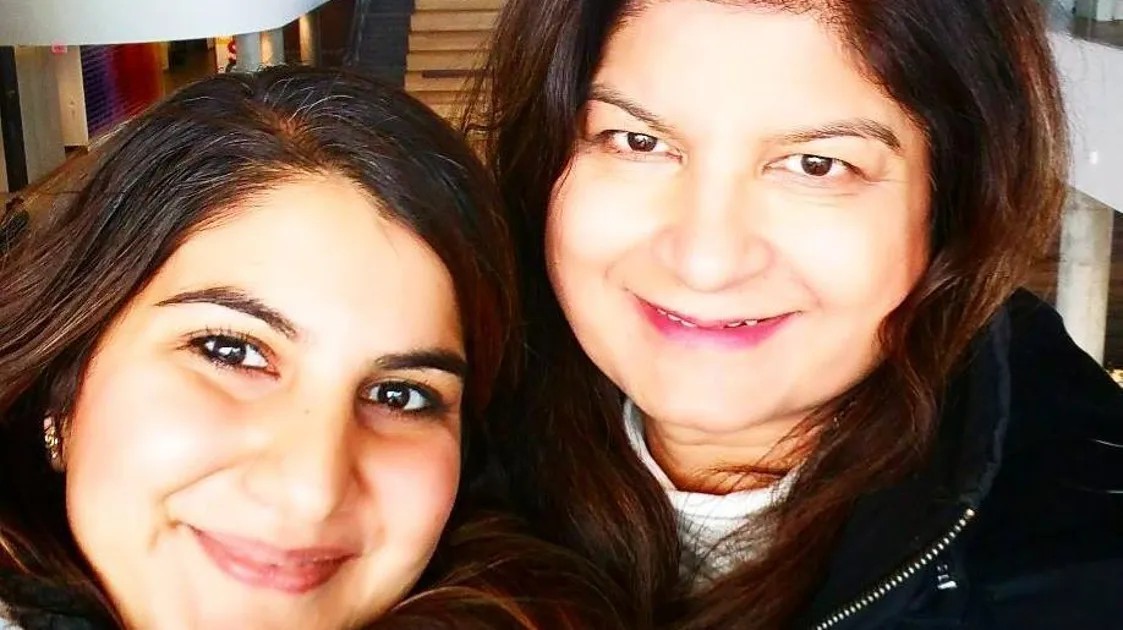
The silence in Mumbai was loud.
Returning to India, to my mother’s birthplace, for the first time without her was a specific kind of shock. I moved through her brother’s house, took my usual neighborhood walks, ate at our old favorite restaurants. I felt her presence everywhere. It wasn’t a hallucination. It was just… there.
Most acutely, I felt it as the anesthesia kicked in at Lilavati Hospital. I was drifting into sleep, my future frozen eggs ready to be stored. My mother had been my rock during my first round of egg freezing. Now, she was gone. Cancer had taken her after a two-year battle. Her absence in the second round wasn’t just emotional. It was physical. Visceral.
But there was a strange poetry in it. Going back to her homeland to preserve my fertility felt like a final act of connection.
Why I Started the Fertility Clock
It started six years ago. A breakup. COVID-19 lockdowns. Long-distance relationships that just didn’t work out. I was in my early 30s.
I had just founded a maternal health organization in Kenya, Maziwa Breastfeeding. I was surrounded by stories of working moms who were struggling, burning out, or forced to choose between careers and children. I knew then: I wasn’t ready for motherhood yet. Not for several years.
I looked at adoption. It’s noble, sure. But the costs? The complexities? Especially for a single parent looking internationally? It was a nightmare. So, as the world froze in time during the pandemic, I decided to freeze mine.
I’d been watching my hormone levels. Routine tests. Then, the numbers came back. My Anti-Müllerian Hormone (AMH), a key indicator of ovarian reserve and egg quantity, had dropped significantly. Stress? Probably. Starting a business while grieving a breakup during a global quarantine? That’s a heavy load.
We like to think our fertility is tied to our womanhood. Biologically, it isn’t. But emotionally? It hits hard. For me, the drop just meant the clock was ticking faster than I hoped. It was time.
The Logic Behind Choosing Mumbai
Why India? Why not stay close to home in Kenya or go back to North America?
My mom’s family was still in Mumbai. They knew the lay of the land. India has world-class healthcare services, and medical tourism for procedures like this is common. But here was the real kicker: I was a self-employed entrepreneur. No corporate insurance. I was paying out of pocket.
Egg freezing in North America can be a fortune. In Mumbai? One-third of that price. It was a logistical and financial no-brainer.
The first round was intense. More all-consuming than I imagined. Constant check-ups. A confusing injection routine that felt like a part-time job. But my mom was there. She was my nurse, my translator, my rickshaw driver. She picked up every prescription. Her presence calmed the chaos.
By the end of that first cycle, I had a decent haul of oocytes. Given my age and AMH levels, it was solid. And those eggs were stored in Bandra, just minutes from her family’s home.
The Second Round: Facing the Void
Egg freezing isn’t a magic button. It’s often sold as insurance. It’s not. It’s an odds game.
Success depends on egg quality. How many survive the thaw? Do they fertilize? Will they become healthy embryos? And then, what happens when I actually try to conceive? Health, timing, circumstance—it’s a cascade of variables.
Knowing that, I opted for a second round this year. A larger bank of eggs increases the chance of having enough viable embryos later. It’s about stacking the deck in my favor.
Stepping back into Lilavati Hospital was different.
The first time, my mom held my hand through every appointment. This time, it was just me, Google Maps, and my broken Hindi. I fumbled through scans and prescriptions alone. The ache was palpable. Nostalgia, guilt, loneliness. They mixed into a cocktail I wasn’t sure I could drink.
Yet, the doctors were surprised.
My AMH levels? They were higher than they were five years ago. Stress, it seems, has its own strange metabolism. Or maybe it’s just biology refusing to predict the future. Either way, I had another decent retrieval. Combined, these two cycles could potentially give me enough for one child. Or two.
The Poetic Biology of Lineage
Egg freezing is immersive. It’s emotional labor disguised as medical procedure.
I feel lucky. I had my mom for the first round. For the second, I had her memory and her family. Their support in her hometown kept me afloat. She wasn’t physically there, but I felt her spirit in the choices I made. In the decision to go back to her city.
Since her passing, the desire for biological children feels more urgent. It hasn’t been an easy year. But I am grateful. Grateful for the privilege of making reproductive decisions on my own timeline. Grateful for the chance to carry her lineage forward.
There’s a biology lesson that stuck with me. When we are fetuses in our mothers’ wombs, our own egg cells are already forming. We are born with all the eggs life will ever give us.
Think about that. The earliest cells of my future children were once carried by my mother. And now, they are being preserved by me. Nesting dolls of matrilineal ancestry.
She will never meet her grandchildren. That fact breaks my heart. But I hold onto this hope: Someday, I’ll look into their eyes and see pieces of her. Not just my own reflection.