You walk into Hope Hooton’s home, and for a second, you forget why you’re there. The air feels lighter. There are Magna-Tiles sprawled across the floor like fallen stars. Pokémon cards are scattered on the coffee table, abandoned mid-game. Lego bricks hide under chairs. Blankets drape over furniture in makeshift forts that scream of imagination and play.
Somewhere nearby, laughter echoes. It’s the kind of sound that fills a house from floor to ceiling.
If you hadn’t seen the news, you might think this is just another Tuesday in a happy Arizona home. But the children who built these worlds—Alec, seven, and Lydia, six—are gone. Taken by a tragedy that was, in Hooton’s view, entirely preventable.
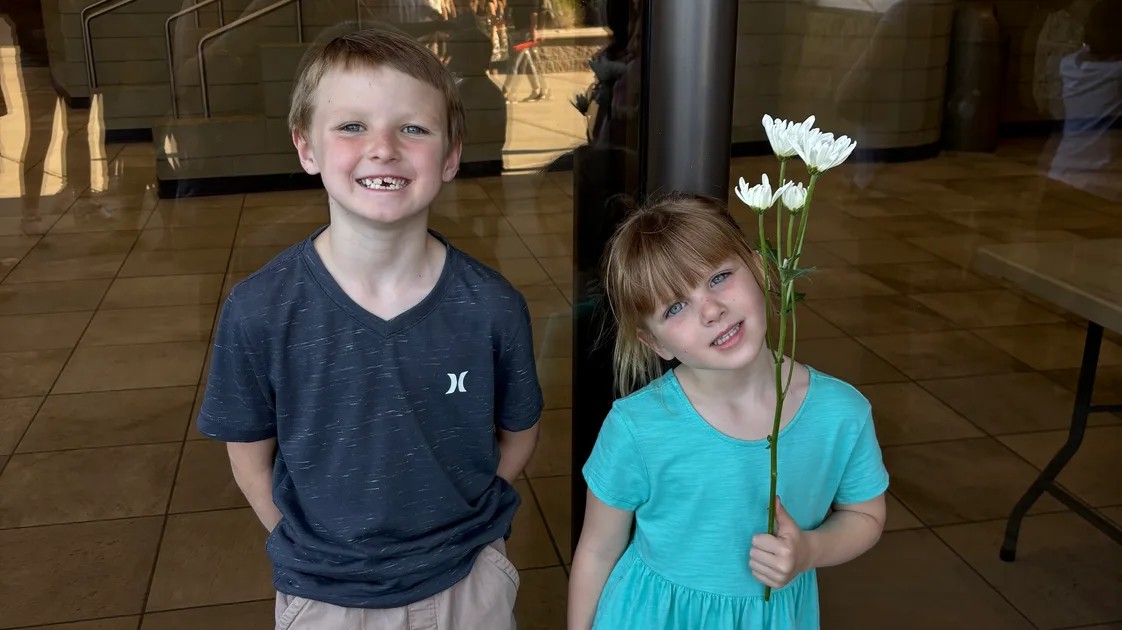
They were just kids before the world knew them as victims. Alec was a big brother who took his job seriously. He helped with laundry, carried groceries, and loved people with an intensity that surprised even his mom. “I love you to the last planet and back,” he told her once. A phrase he made up. It fits.
Lydia was his shadow. Sissy to his Brother. She loved unicorns, pink, and scooters. She burst through the door after school every day, ready to share her day, ready to run into her mother’s arms with enough force to knock her off balance.
They had bright blue eyes. They had loud laughs. And they had a future that was stolen.
The Warning Signs We Ignored
The story didn’t start with blood. It started in college, when Hooton met her husband. On the surface, it looked like any young couple building a life. They bought a house. They moved to Arizona. They had children.
But beneath the surface, the foundation was cracking.
Hooton now knows the term for what she experienced: coercive control. Back then, she didn’t have the language. She just knew her voice was disappearing.
It started small. She’d suggest dinner spots. He’d dismiss them one by one until she settled on his choice. It wasn’t about the food. It was about obedience. Then came the criticism. How she folded laundry. How she made the bed. How she cleaned.
Hooton is legally blind since birth. Instead of offering support, he used her disability to isolate her. No car means no independence if he controls the keys. Her world shrank. She couldn’t drive to church. She couldn’t drive for groceries. She couldn’t leave without permission.
There were good days, too. Birthdays. Church. Laughter. That’s how abuse traps you. The hope that the good days will outnumber the bad ones. But the fear never left. And eventually, the emotional abuse turned physical. Threats became assaults.
She left. She thought leaving would be safety.
The System’s Failure
Hooton did everything the system told her to do. She documented everything. She told the truth. She followed court orders. She believed the family court system was designed to protect children.
It didn’t.
During the custody proceedings, the burden was placed back on her. She was asked to monitor if their father was taking his medication. No instructions were given on what to do if he wasn’t. No guidance on how to ensure his safety or the children’s. She was just expected to manage a danger she couldn’t control.
She wasn’t asking for revenge. She was asking for protection. She wanted the system to see the warning signs. She wanted professionals to recognize the risk.
They didn’t.
On May 19, 2014, during a court-ordered, unsupervised custody visit, their father killed Alec and Lydia. Then he took his own life.
Hooton didn’t know until May 20. The school called because the kids were absent. She couldn’t reach him. She called the police. When they arrived, the scene inside was fatal. Three dead bodies. One shattered mother.
From Grief to Legislation
Grief is a loud silence. Hooton describes waking up to a house without singing. Without “Mommy, come look!” Without the thud of another Lego brick underfoot. She would give anything for one ordinary afternoon back. One more time to step over the mess. One more hug that nearly knocks her over.
But grief also brings clarity. This wasn’t just bad luck. It was a failure of protection.
Hooton made a choice. She could let grief win. Or she could fight. She chose to fight for the children who still had a chance at safety.
She wrote a book, There’s Still Hope, to explain that domestic violence isn’t just bruising. Coercive control, isolation, and psychological abuse are just as deadly. She started a podcast, Voices Against Filicide, to bring together survivors, judges, and advocates for honest conversations about child safety.
She spoke to legislators. To judges. To communities.
Every time she stood in front of a room of lawmakers, she carried Alec and Lydia with her. They were the reason she answered difficult questions. The reason she walked into another office. The reason she kept telling the story.
Her efforts focused on changing the law. Specifically, she championed the Alec and Lydia Act in Arizona.
What the Alec and Lydia Act Does
The legislation, signed by Governor Katie Hobbs on June 22, 246, represents a significant shift in how family courts handle domestic violence cases. The law requires judges to more carefully consider evidence of coercive control and domestic violence when making custody decisions.
Previously, courts often overlooked these subtler forms of abuse. Now, judges must explicitly explain how they factored these risks into their rulings. This adds accountability. It forces transparency in cases where children’s lives are at stake.
For Hooton, this isn’t about legal jargon. It’s about visibility. It’s about warning signs being taken seriously before the tragedy happens. It’s about children being seen.
A Legacy of Hope
The law passed. But no law brings children home.
Hooton acknowledges the paradox. She celebrates the victory on the legislative floor while mourning the living room that should have been filled with forts and laughter. She thinks about Alec and Lydia, who will never see their names achieve this change.
It’s a painful trade. One law for one life? The math doesn’t work. But she doesn’t trade interviews, speeches, or hearings for that chance. Because the past is fixed. The future is not.
Her hope is that Arizona’s example spreads. That other states strengthen their protections. That professionals keep asking the hard questions when something feels wrong. Most importantly, she hopes Alec and Lydia are remembered for who they were—not just how they died.
Strength wasn’t a choice for Hooton. It was a demand made by grief. She woke up every day deciding to honor her children by fighting for others.
Hope, she says, isn’t pretending the tragedy never happened. Hope is believing love can continue to change lives long after we’re gone. As long as she breathes, she’ll keep telling Alec and Lydia’s story because every child deserves to come home safely.
If you or someone you know is experiencing domestic violence, help is available. In the U.S., call 1800799SAFE (7233).