


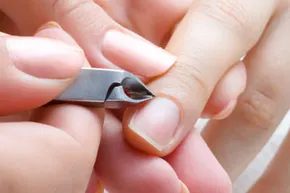
You may remember the chorus from your childhood. “Stop biting your nails.” It was annoying then, and it’s even more annoying now that she was right. If you find yourself staring at your nails as they peel away from your skin, you may have paronychia. Yes, your nail biting habits could be to blame.
Most of us think of cuticles as an optional accessory. They aren’t. That thin layer of skin is a biological barrier. It keeps bacteria, yeast and other invaders from reaching the delicate tissues around the nail bed. Biting this barrier opens the door to infection.
How nail biting causes paronychia
Paronychia is basically an infection of the folds of skin around the nails. Nail biting causes microscopic tears in your cuticles. These openings allow pathogens to enter. The result? The cuticle detaches from the nail plate. It’s painful, it’s ugly, and it’s a clear sign that your hands is trying to tell you something.
But before you give up nail clippers for good, know that biting isn’t the only way to path to this issue.
Who is at risk?
* Manicure lovers: Aggressive trimming or pushing in cuticles can weaken the seal.
* Wet work professionals: Bartenders, housekeepers and dishwashers are the main targets. Constant exposure to water and cleaning chemicals softens the skin, making it easier for bacteria to breach the defense line.
Bacterial vs. Fungal: Knowing the Difference
Not all paronychia look or feel the same. The cause determines the timeline and treatment.
Acute bacterial paronychia
Onset: Suddenly. You may notice redness and swelling overnight.
* Symptoms: Pain, tenderness and often pus-filled blisters.
* Cause: Bacteria usually enter the skin through break in the skin, such as nail biting.
chronic fungal or yeast paronychia
* Onset: Slow and persistent. It lingers for several months.
* Symptoms: Less acute pain, but the nail may become discolored or deformed.
* Cause: Usually associated with frequent wet work and immunosuppression.
The separation you see is the body’s response to inflammation. The nail lifts because the underlying tissues are angry.
How to Treat of peeling cuticles and nails
The good news: Paronychia is easy to treat. The bad news: fully resolve can take days or weeks. Here is how to handle it on the type of infection, are as follows:
For bacterial infections:
1. Soak it: Soak the affected finger in warm water for 15-20 minutes three to four times a day. This will reduce swelling and encourages drainage.
2. Antibiotics: If the infection is deep or does not improve with soaking, a doctor may prescribe oral antibiotics.
3. Drainage: In severe cases, a medical professional may need to make a small incision to drain the pus. Do not try this at home.
For Fungal Infections:
*Soaking alone won’t cut it. Topical or oral antifungal medications may be needed.
* be patient. Fungal infections can last for several months. Consistency with medication is important.
Prevention: Stop the Separation before it starts
The best treatment is avoidance. Cuticles doing heavy lifting in your health. Protect them.
- Quit the biting: It’s easier said than done, but every time you stop, the gap closes.
- Use gloves: If your job involves washing dishes or handling chemicals, the use of rubber gloves is non-negotiable. Keep your hands dry.
- Trim nails to avoid clipping them: Keep nails short and smooth. Use clean scissors.
- Leave the cuticles alone: Do not cut or push the cuticles back roughly. Let them do their job.
Answers to frequently asked questions about nail art
What is the difference between paronychia and onycholysis?
Paronychia is an inflammation of the skin “around” the nail, usually caused by biting bacteria. Onycholysis means the actual detachment of the nail plate from the nail bed. It is usually caused by trauma (such as nail biting), fungal infection, or psoriasis.
What causes ingrown toenails?
Small bumps or holes on the surface of the nails can be a sign of psoriasis, psoriatic arthritis, connective tissue disease or an autoimmune disease. It is worth mentioning to the dermatologist.
What is the skin around the nails called?
The thin layer of dead skin covering the nail plate is the cuticle. It attaches to the nail epithelium, which is the living skin at the base of the nail. It is common to confuse them, but it is important to protect both.
Why are my cuticles and nails peeling?
The most common is acute paronychia. The barrier is broken. Bacteria and yeast can get in there. My nails are standing up. Once you repair the blockage and treat the infection, your nails will grow back to health.
How is paronychia treated?
Soaking in warm water is your first line of defense. In severe or chronic cases, medical procedures such as drainage or prescription medications may be required.
My nails are growing back. This takes time. But until then, your hands are sending you signals. Please listen. Please stop chewing. Keep it dry. Maybe, just maybe, your mom is right.


