


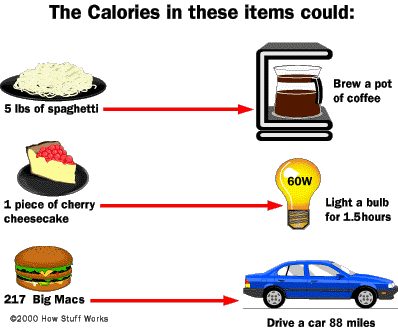
We live in the age of the calorie counter. You walk into a grocery store and every single package screams for your attention. Nutrition labels are everywhere. The numbers stare back at you. We are taught to obsess over these figures, cutting them out or tracking them with religious devotion. It feels like the only way to survive the modern diet landscape. But here is the thing. Most of us have no idea what a calorie actually is.
A calorie is a unit of energy, not a moral judgment on your food choices.
It starts with science. A basic calorie, often written with a lowercase c, is the amount of heat energy needed to raise the temperature of one gram of water by one degree Celsius. It is a physics term. A big Calorie, with a capital C, which is what you see on food labels, is actually a kilocalorie. It takes 1,000 of those small calories to heat up a kilogram of water.
So when you say you ate 200 calories for lunch, you are technically saying you consumed 200 kilocalories. That is a lot of heat energy.
This distinction matters. It matters because we have turned a simple measurement of energy into a scoreboard. We treat food like a math problem. Eat less. Move more. The logic seems sound on paper. But food is not just fuel. It is chemistry. It is biology. It is culture.
Counting calories ignores the context. It ignores how your body processes different macronutrients. It ignores hunger cues. It ignores the fact that a 100-calorie bag of chips does the same thing to your blood sugar as a 100-calorie portion of broccoli. They are not equal. The energy density is the same. The impact on your body is completely different.
We need to stop looking at calories as the be-all and end-all. They are just one piece of the puzzle. A small piece. A misleading piece if you let them control your entire relationship with food.
Think about it. Why do we trust a number on a box more than how we feel after eating? The number doesn’t know your metabolism. It doesn’t know your stress levels. It doesn’t know what you had for breakfast three days ago.
It is time to look past the label. The real conversation about nutrition starts long before you count anything.
We treat calories like they’re personal enemies. We track them, fear them, and try to outsmart them. But they aren’t moral judgments. They are units of energy. Think of a gallon of gasoline. It holds about 31 million calories. Food isn’t so different in principle, just in density.
The Kilocalorie Confusion
Here is where it gets tricky. When you see “200 calories” on a soda can, you are looking at a lie of omission. Technically, that is 200 kilocalories. One kilocalorie equals 1,000 scientific calories—the heat needed to raise a gram of water by one degree Celsius.
Food manufacturers dropped the “kilo” for simplicity. It’s easier to say “200 calories” than “200,000 calories.” So when we talk about calories in this context, we mean kilocalories. Every time.
Fueling the Machine
Your body is a furnace. It needs energy to pump blood, breathe, and keep you warm. That energy comes from three macronutrients: carbohydrates, protein, and fat.
Carbs and protein each pack 4 calories per gram. Fat packs 9. It’s nearly double. That’s why fat is so energy-dense.
Take a packet of maple-and-brown-sugar oatmeal. The label says 160 calories. If you burned that oatmeal in a vacuum until it vanished, it would release 160 kilocalories of heat. Break it down:
– 2 grams of fat = 18 calories
– 4 grams of protein = 16 calories
– 32 grams of carbohydrates = 128 calories
Total: 162 calories. The label rounds down. They always do.
Your enzymes break these down into glucose, fatty acids, and amino acids. They travel through your bloodstream to your cells. There, they meet oxygen. Energy is released. You live.
Your Basal Metabolic Rate
So, how many of these kilocalories do you actually need? The average label suggests 2,000 a day. That’s a rough guess. It’s an average. It doesn’t account for your height, weight, age, gender, or activity level.
Your daily burn comes down to three things:
– Basal metabolic rate (BMR)
– Physical activity
– Thermic effect of food
BMR is the biggest chunk. It’s 60 to 70 percent of your daily burn. This is the energy your body uses while doing absolutely nothing. Heartbeat. Lung expansion. Kidney filtration. Temperature regulation.
Men generally have a higher BMR than women. You can estimate yours using the Harris-Benedict formula. It’s not perfect, but it’s a starting point.
For adult males:
66 + (6.3 x weight in lbs) + (12.9 x height in inches) – (6.8 x age)
For adult females:
655 + (4.3 x weight in lbs) + (4.7 x height in inches) – (4.7 x age)
Yes, the formula for women starts with 655. It looks strange. It is correct.
Why It Matters for Weight
Calories in versus calories out is the basic law of physics. But the human body isn’t a simple calculator. It’s a complex biological system. When you cut calories too low, your body panics. It slows your BMR. It holds onto fat. It’s survival mode.
Understanding your BMR helps you set realistic goals. If your BMR is 1,400 calories, eating 800 a day isn’t a strategy. It’s a metabolic crash. You need enough fuel to keep the furnace running.
Moving Beyond the Number
Knowing the math is step one. Applying it is harder. You aren’t just counting numbers. You’re managing energy.
Fat gives you the most energy per gram. Carbs give you quick energy. Protein builds tissue. None is inherently bad. They serve different purposes.
Your activity level changes the equation. If you jog a mile, you burn about 100 kilocalories. That’s not 100 regular calories. That’s 100,000. Big difference.
The goal isn’t to obsess over the math. It’s to understand the balance. Eat enough to fuel your life. Move enough to support your health. The rest is noise.
The Real Cost of Moving and Digesting
Most people stop at Basal Metabolic Rate. They think that’s the whole story. It isn’t.
You have to add physical activity. This is the second biggest drain on your energy tank. It ranges from making your bed to jogging. Walking, lifting, bending. All of it burns calories. But the number depends entirely on your weight. Heavier bodies burn more to move. Lighter bodies burn less. If you need exact numbers for specific actions, there are tables online that break it down by weight. Don’t guess. Check the data.
Then there is the thermic effect of food. This is the energy your body spends just to break down what you ate. It takes work to process nutrients. To calculate this, take your total daily intake and multiply it by 0.10. Ten percent. That’s the cost of digestion. If you’re trying to track your intake, you’ll need a reliable database. The USDA National Nutrient Database is a good start. So is Food Data or Mike’s Calorie And Fat Gram Chart.
Add BMR plus activity plus the 10% digestion tax. That’s your daily need. Rough estimate? You can skip the math and use a calculator online.
The 3,500 Calorie Rule
So you eat more than you burn. You gain fat. You eat less. You lose fat.
It’s simple physics. An extra 3,500 calories gets stored as one pound of fat. Your body saves energy for a rainy day. It’s efficient. Cruel, but efficient. If you burn 3,500 more calories than you consume, your body dips into its reserves. One pound of fat disappears.
Exercise doesn’t just burn calories while you’re moving. It kicks your metabolism up for a while after you stop. About two hours post-workout, your body continues to burn calories at a higher rate. You’re still burning fuel long after you’ve left the treadmill.
Does It Really Matter Where Calories Come From?
People ask this all the time. If you eat exactly what you burn, does the source matter? For weight alone? No. A calorie from protein is the same unit of energy as a calorie from fat. If you eat more than you burn, you gain. Less, you lose.
But if you care about health, the source matters immensely. Carbs and protein are generally healthier than fats. Your body needs some fat to function. It helps absorb vitamins. But too much fat causes serious health issues.
The FDA says max 30% of daily calories should come from fat. On a 2,000 calorie diet, that’s 600 calories from fat. Or 67 grams. Many doctors push for 25%. That’s 56 grams. Go lower.
Some foods are calorie bombs. You might not expect it.
- Canola oil: 1 cup has 1,674 calories and 218 grams of fat.
- Peanut butter: 1 cup has 1,520 calories and 129 grams of fat.
- Cheddar cheese: 1 cup has 531 calories and 44 grams of fat.
- Chocolate syrup: 1 cup has 837 calories but only 3 grams of fat.
- Sugar: 1 cup has 774 calories and zero fat.
- Coca-Cola: One can has 140 calories and zero fat.
Numbers don’t lie. But they don’t tell the whole story either. What you fill your plate with determines how you feel. How you sleep. How you age. It’s not just about the math. It’s about the fuel.
You can dig deeper into how fats work or how diet pills actually function if you want to understand the mechanics. Or you can just start cooking.


