Getting old doesn’t mean getting weak. It’s a common assumption. A lazy one, really. While the calendar flips and joints complain, muscle mass doesn’t have to evaporate into the ether. Keeping your independence? That’s the goal. And strength is the currency that buys it.
Trainer Patricia Greaves, CPT. She runs StrongHer Personal Training. Specializes in menopause fitness, too, guiding women in their forties, fifties, and beyond through the shifts. For your sixties. She’s picked six essential moves. Not fancy stuff. Foundational work. Things that let you lift grocery bags, pick yourself off the hardwood if you trip, and just… stay upright.
“They target the muscles and movement patterns that helps you do everyday things,” Greaves says.
It’s not about aesthetics. It’s about function. Posture. Joint health. Bone density. You can start this at twenty. You can start it at eighty. Better late than never, but sooner is smarter.
The Equipment
Just dumbbells. Medium. Heavy. Maybe a sturdy counter. A box. Or the floor itself. No gym membership required. No complex machines humming in the background. Just you and gravity.
Do each move for 8-12 reps. Repeat the circuit two or three times. Rest when your lungs beg for it. Keep the flow, but listen to your body.
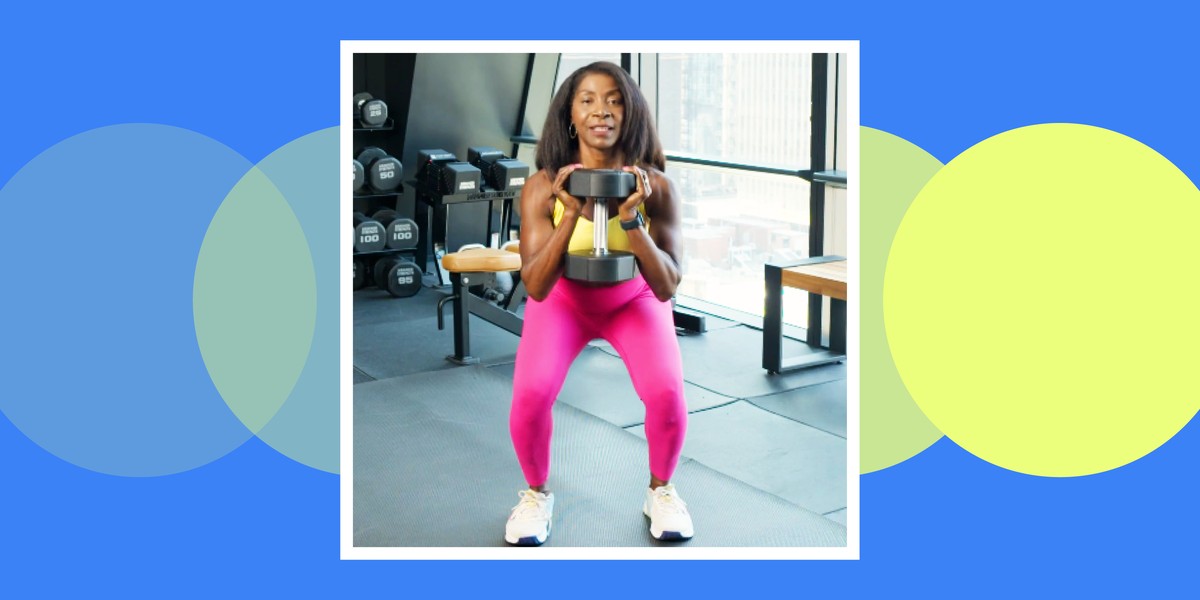
1. The Goblet Squat
Stand with feet slightly wider than hips. Toes pointed out. Hold a dumbbell by the end at your chest like it’s a trophy. Or a threat. Elbows tucked in tight to your ribs.
Lower down. Thighs parallel to the floor if you can manage it. Don’t let the chest cave forward. Pause. Push back up.
Why? It’s balance work disguised as leg day. The weight at your chest forces the core to engage, stabilizing you while you squat. It hits the hips. Ankles. Areas that stiffen with age. It’s also weight-bearing. That means bone density stays up. Osteoporosis risks go down. Win-win.
2. The Bent-Over Row
Feet staggered. Hinge at the hips until you’re at a 45-degree tilt. Knees slightly bent. Back flat. This part matters.
Pull the dumbbells up. Drive the elbow back toward the hip. Squeeze the shoulder blades together. Like you’re holding a pencil between them. Lower it slowly. Switch sides.
Why? Pulling power. You need it for opening heavy doors. For hauling luggage. For life. It strengthens the upper back, fighting that slouchy posture that creeps in as decades pile up. Lean muscle remains. Bones stay dense.
3. The Jump Squat
Wait. What? Jumps in your sixties? Yes. If you can.
Stand with feet shoulder-width. Drop into a squat. Keep the chest up. Core tight. Explode up. Jump as high as physics allows you. Land soft. Bend the knees to absorb the impact. Go straight back down for the next one.
Why? Plyometrics build bone density. They build resilience. It sounds counterintuitive—jumping might seem risky—but it prepares the joints for impact. It keeps you quick. Agile. Plus, it spikes the heart rate. Sneaky cardio while you lift. Who doesn’t want that?
4. The Bird-Dog
Get on all fours. Shoulders over wrists. Hips over knees. Back flat like a table. Engage the core.
Extend the right arm forward. Extend the left leg back. Opposites. Hold it. Keep hips level. Don’t arch the back. Reach through the fingers. Squeeze the glutes. Squeeze the lats.
Come down with control. Switch sides.
Why? It’s physical therapy gold. Stabilizes the spine. Trains the body to move as a coordinated unit. One side pulls, the other pushes. Balance improves. Injury prevention? Top notch. Low impact. High reward.
5. The Glute Bridge
Lie on your back. Knees bent. Feet flat on the floor. Hip-width apart. Arms at sides, palms down, pressing into the ground if needed.
Drive through the heels. Lift hips to the ceiling. Squeeze those glutes at the top until your body forms a line from shoulders to knees. Pause.
Lower slowly. Don’t crash down.
Why? Simple. Accessible. Hits the glutes and hamstrings—the engines of your posterior chain. Stronger there means better hip support. Better posture. Less lower back pain, which is the scourge of aging. Pelvic stability improves. Backache decreases.
6. The Incline Push-Up
Not the floor yet. Start high. Hands on a bench. A box. A sturdy countertop. Shoulders width apart. Body in a straight line. Head to heels.
Lower the chest. Elbows at 45 degrees. Not flared out. Not tucked in tight. Just right.
Push back up.
Why? It’s the entry to pushing power. Eases the strain on shoulders while building the chest, shoulders, and triceps. Essential for pushing yourself up from a chair. For shoving open a stuck door. It keeps the upper body functional without crushing the joints.
It’s a short list. Six moves. That’s it? That’s it. Consistency beats intensity every time. Show up. Do the reps. Build a frame that supports the weight of living. The floor isn’t where it ends.