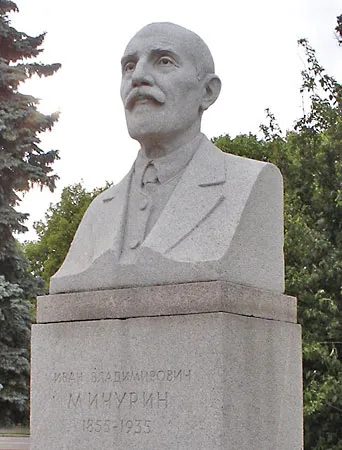
Ivan Vladimirovich Michurin was not only a gardener. He was a gardener whose task was far beyond the garden fence. He was born on October 27, 1855 at Vershino Manor near Dolgoye, Russia and spent his life bending nature to his will. He died on 7 June 1935 in Michurinsk, leaving behind a legacy as politically charged as agriculture.
Michurin’s work was guided by a certain biological belief. He wanted to prove the inheritance of acquired characteristics. It was Lamarck’s idea. The idea that traits developed during an organism’s life could be passed on to offspring. To support this, he developed more than 300 new fruit tree and types of berries. These were not small changes. These were significant variants of crops that could withstand harsher conditions or produce better yields.
Why was it so important? Because it caught the attention of the Soviet government. The government was looking for a scientific framework that met its ideological goals. Mendelian genetics, based on discrete units of inheritance, came under attack. It was considered “bourgeois” and contradicted Marxist theory. In contrast, Michurin’s theories of hybridization offered a narrative of progressive change. A story that fits the Soviet Union’s vision of renewing the world.
This alignment was solidified by T.D. Lysenko. He explained Michurin’s methods and made them the official science of genetics. The result was a state-approved doctrine. It was widely adopted in the Soviet Union. It shaped agricultural education and research for decades.
The world outside the Soviet Union thought otherwise. Scientists around the world rejected this doctrine. They identified flaws in the underlying biological assumptions. But within the Soviet bloc, the debate ended in political force. Michurin’s name became synonymous with this state-sponsored science. His life’s work laid the botanical foundation for the political movement.
Did he really prove the inheritance of acquired characteristics? Modern genetics says no. The mechanisms he proposed were not supported by evidence. But his influence was real. It determined who got the funding. It shaped what theories were taught in universities. It shaped what farmers planted.
Ivan Michurin’s story is not just about apples or pears. It’s about how science can be turned to serve power. It’s about the costs of rejecting established knowledge. His 300 new varieties are still physical evidence of his work. The scientific framework he helped create was dismantled. But the political lesson continues.
What happens when the state decides that one interpretation of biology is true? The answer is written in the history of agriculture in the Soviet Union. And in the lives of those who tried to grow food in the shadow of ideology.