


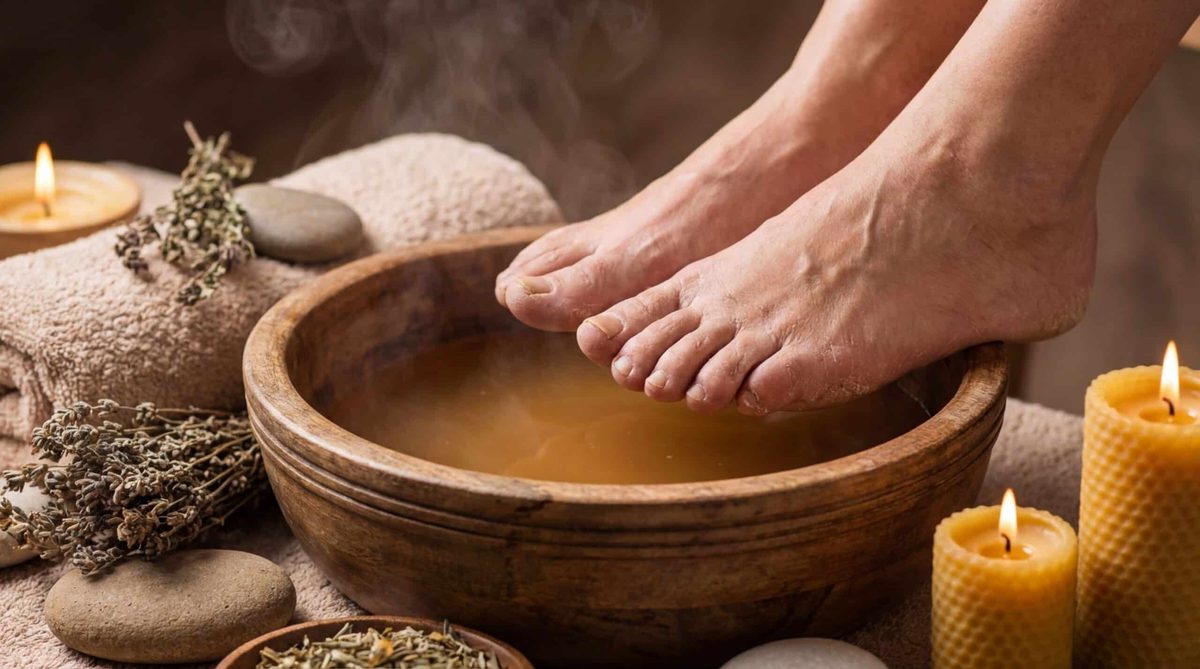
Spring is here. Sandals are coming out of the closet. And with them, that same old problem: rough heels. Thickened skin. Those patches of corn that instantly make your feet look dull. During winter, closed shoes rub against your skin. The air gets dry. Your body reacts by thickening the skin to protect itself. You want soft feet for sandals. You don’t need an aggressive rasp. You don’t need expensive treatments. A simple foot soak can transform the texture in about twenty minutes. The goal isn’t to strip the skin. It is to soften it. To prepare it for a gentle scrub. The result often surprises people. Your feet feel lighter. They look clean. They look like they can breathe again.
Why Apple Cider Vinegar and Honey Work Better Than Harsh Scrubs
A well-planned foot soak changes everything. It acts as a prep phase. The hardened skin absorbs water. It softens gradually. It becomes easier to remove without forcing it. Apple cider vinegar helps restore a sense of cleanliness. It calms thickened skin. Honey adds a soothing element. It prevents that tight, pulling feeling after soaking. The skin looks more pliable. The edges of calluses become less jagged. Touching the foot feels smoother. This duo isn’t magic. It simply prepares a more comfortable landscape for the next steps. This limits the urge to scrub too hard. That is often where the difference lies. Between soft feet and irritated skin that produces even more callus.
This method suits classic calluses. Rough heels. Thickened areas under the ball of the foot. Small corn bumps on the sides. It is ideal when skin looks dull. When friction has left an uneven surface. But it cannot do everything. If your heels have deep, painful cracks. If a zone is inflamed. The goal isn’t to “make it go away” at all costs. The goal is to protect and soothe. In these cases, repair comes first. Sometimes professional help is needed. The foot soak improves comfort. It does not replace proper care for major fissures. It won’t fix a suspected fungal infection. It won’t help if walking causes persistent pain.
A few precautions prevent surprises. Do not do this on irritated skin. Not on an open blister. Not on a bleeding crack. If you have diabetes. Circulation issues. Or loss of sensation. Avoid self-exfoliation. Ask a podiatrist. A small lesion can go unnoticed. If the apple cider vinegar stings upon contact. Your skin is signaling fragility. Dilute it more. Or stop. The goal is a comfortable treatment. Never a “tough” one.
The Pantry Recipe: Exact Mix and Water Temperature for Best Results
For this foot soak to work, it all comes down to dosage and water temperature. The two ingredients are easy to find in your kitchen. The recipe is intentionally simple. It is meant to be repeated without thinking. Prepare the list before filling the basin. Keep the movement crisp and quick. Avoid improvising over warm water. This leads to overdosing or water that is too hot. The objective is a comfortable soak. One that softens skin without aggression. It leaves a feeling of cleanliness and lightness right after.
- 3 tablespoons of apple cider vinegar
- 1 tablespoon of honey
Fill the basin with tepid water. It should feel pleasant. Like a hand bath. No steam. The level must cover the heels and the sole of the foot. No need to fill it to the brim. Honey dissolves better in already warm water. Then add the apple cider vinegar. The reference duration is twenty minutes. Long enough to soften the callus. Not too long to avoid weakening the skin barrier. For extra comfort. A towel on the floor. A backrest to sit properly. A quiet moment is all you need. At the end, the skin shouldn’t be overly whitened. Just more supple. Like after a long shower. Ready for a targeted gesture.
Three mistakes often ruin the results. First, water that is too hot. It gives the illusion of going faster. But it dries and irritates. This pushes the skin to defend itself afterward. Second, leaving it too long. After a certain point, the skin weakens. The temptation to scrub too hard increases. Finally, using too much vinegar. More is not better. Especially on sensitized skin. With the right proportions, the soak remains balanced. The skin comes out prepared. Not attacked.
You can tell the callus is ready when its texture shifts. The edges soften. The surface stops catching on your finger. After twenty minutes of soaking, the hardened skin is no longer a rock-hard barrier. It’s pliable. Now you target the pressure points: the heels, the ball of the foot, the side of the big toe.
The pressure must stay moderate. You aren’t trying to reach “new” skin. You are just leveling the thickened layer. The pumice stone shines here. It polishes rather than strips. But only if your skin is wet. Stop if the area turns pink. Warmth or redness is a hard limit. Respect it.
The gentlest technique: short strokes, consistent rhythm
The best method relies on regularity. Move in one direction only. A few minutes is enough. Do not sand for long. A short, targeted gesture repeated at the right rhythm yields better results than an intense session that leaves raw skin.
Frequency matters too. If you exfoliate too aggressively, your skin thickens further to protect itself. This is the rebound effect. Skincare must remain progressive. It should feel comfortable. If you feel pain, stop. The pressure is too high, or that spot isn’t a simple callus.
The finish: rinse, dry, seal
Exfoliation is only half the battle. The finish prolongs the effect. Rinse with clear water to remove debris. Dry thoroughly—especially between the toes—to trap no moisture. Then apply a rich moisturizer or nourishing balm in a generous layer.
For deeper absorption, wear cotton socks for twenty minutes. Or leave them on overnight. You will wake up with a softer sensation. The goal is better penetration. The result is softer skin.
How to keep heels smooth for longer
Your routine depends on the level of buildup. Slightly rough heels? A bath and gentle exfoliation every two weeks is often enough. Stubborn calluses? Start with a weekly routine. Then space it out as the skin softens.
Consistency beats intensity. A “big session” followed by months of neglect invites a return of the thickened zones. This is especially true during seasonal transitions. We swap sneakers for loafers, then sandals. Different shoes mean different friction points. Regular maintenance keeps the corn at a reasonable level. It prevents those rough patches from returning.
Limiting recurrence starts with daily habits. Choose shoes that don’t shear the heel. Alternate pairs. Wear socks that reduce friction. Check your insoles for hardness. A pumice stone is safer than a metal rasp. Aggressive tools trigger a defense reaction in the skin.
If you notice persistent odor, redness, or itching, stop. You might have a fungus or an irritation. For painful fissures or bleeding, pause exfoliation. Seek professional advice. These are prudent and protective choices.
Going to the root: habits that transform foot skin
Soft skin is built from the inside out. Hydration helps skin resist daily aggression. A varied diet supports cutaneous regeneration.
Omega-3s (fatty fish, walnuts, seeds). Zinc (legumes, eggs, seafood). Vitamins from fruits and vegetables. These nutrients make skin more resistant. They reduce dryness. Aim for a balanced plate. It gives a discreet but real boost to skin texture, even on thick areas like heels.
Sleep and stress play a role too. Skin repairs itself when the body recovers. A stable sleep rhythm—even without marathon nights—improves regeneration. It limits that dull look.
A simple global routine makes the difference:
– Quick foot cream every night.
– A small massage of the heel and sole.
– Reasonable exfoliation.
– Attentive hygiene with proper drying between toes.
This regularity prevents starting from zero with every season change. It keeps feet presentable and comfortable as soon as sandals reappear.
After preparing the skin with a warm vinegar and honey bath, then smoothing it gently with pumice, the feet gain clarity without aggressive gestures. The key to lasting results? Maintenance. Protection from friction. Regular nourishment.
Is the real question this spring not “how to remove corn quickly” but “how to prevent it from coming back” by simply adapting shoes and hydration to daily life? The answer lies in the routine, not the rush.


